
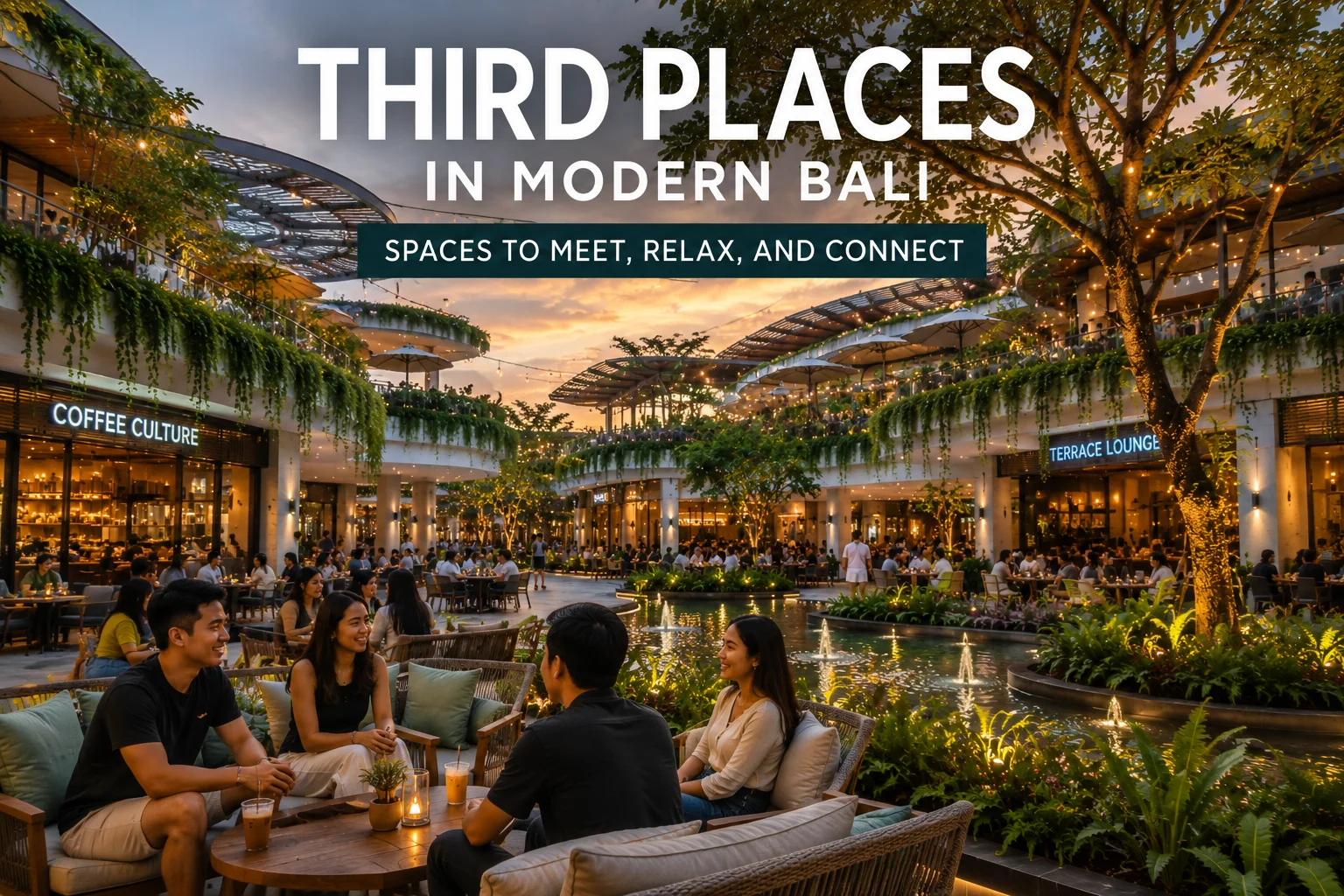
The way people spend their free time in Bali is changing. Alongside beaches, cafés, restaurants, parks, and cultural destinations, modern malls are becoming places where people can meet, relax, and spend time together. For many residents and visitors, a mall can offer a convenient environment where social activities, dining, entertainment, and relaxation come together.
This idea can be understood through the concept of a “third place.” Traditionally, home is one important place in daily life, while work or school represents another. A third place is an environment outside those primary spaces where people can interact, unwind, and build social connections.
In modern Bali, malls can sometimes serve this role by providing comfortable and accessible environments for different types of social activities.
What Is a Third Place?
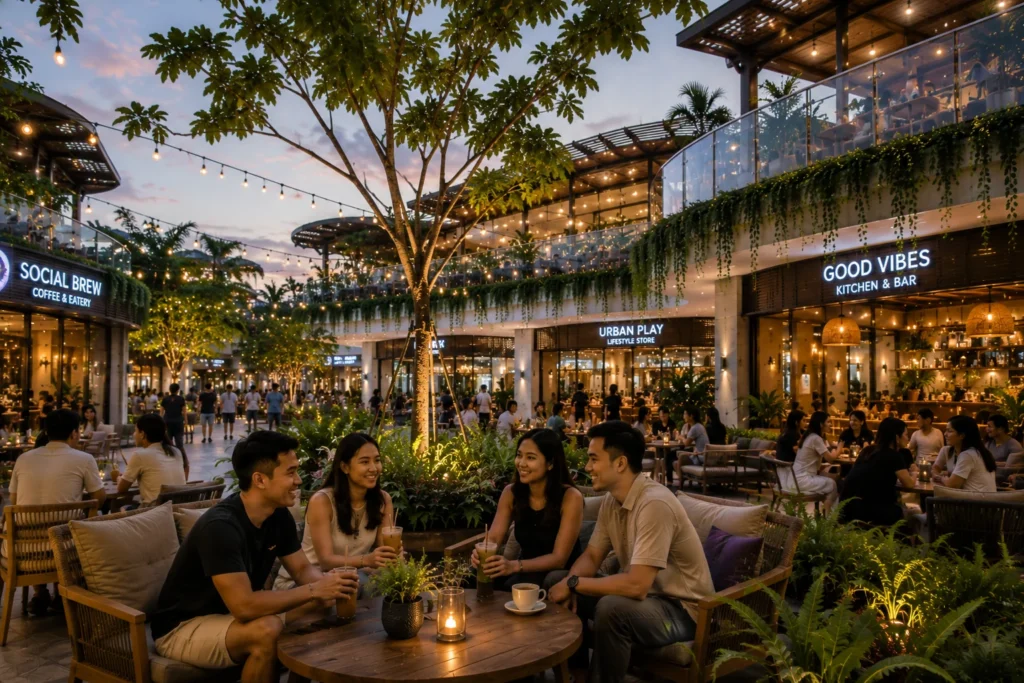
A third place is generally an informal environment where people can spend time outside their home and workplace or school. It can be a café, park, community space, restaurant, library, or other destination where people naturally gather.
The important characteristic is not necessarily the type of building. Instead, it is how people use the space.
A good third place gives people a reason to stay without requiring a formal appointment or specific purpose. Someone can meet a friend for coffee, sit and read, have a conversation, attend an event, or simply spend time observing the surrounding atmosphere.
This makes the concept particularly relevant to modern urban environments, where people increasingly look for comfortable places to spend time between their daily responsibilities.
Why Malls Can Become Third Places in Bali
Malls have several characteristics that allow them to function as informal social spaces.
They are generally accessible, provide shelter from the weather, and offer a variety of facilities within one destination. Visitors can find restaurants, cafés, entertainment, seating areas, event spaces, and other facilities without having to travel between multiple locations.
Bali’s climate also makes comfort an important consideration. Hot afternoons and sudden rainfall can make outdoor plans less predictable. An indoor or semi-outdoor environment gives people another option for spending time comfortably.
This does not mean that every mall automatically becomes a third place. The atmosphere, design, facilities, and activities available all influence whether visitors actually want to stay.
Meeting Friends After Work
One of the simplest ways malls can function as third places is by providing somewhere for friends and colleagues to meet.
After work, people may not want to immediately return home. A café or restaurant can provide a relaxed setting for conversation before the evening continues.
The convenience of having several dining and entertainment options nearby can also make planning easier. One person might arrive for coffee while another joins later for dinner or an evening activity.
This flexibility allows a mall to become part of people’s regular routines rather than somewhere they only visit for a specific occasion.
Spending Time With Family
Families can also benefit from the flexibility of third-place environments.
A family outing does not always need to revolve around one major attraction. Parents may want to sit down for a meal, children may want entertainment, and everyone may need a comfortable place to take a break.
A well-designed mall can accommodate these different needs within the same destination. Families can have lunch, spend time together in an entertainment area, relax at a café, and continue with another activity without needing to travel to another part of the city.
This makes the environment particularly useful for families who want a relaxed day without following a strict itinerary.
Cafés as Social Anchors
Cafés are often among the most recognizable examples of third places, and they can play a similar role within modern mall environments.
A café provides an informal reason to sit down and stay. People can meet friends, have conversations, work casually, or simply enjoy a drink while taking a break.
The design of the café and its surrounding environment can influence the experience. Outdoor terraces, comfortable seating, greenery, natural lighting, and views of active public areas can make the space feel more inviting.
When cafés are integrated into a broader destination, visitors can also move between different activities without losing the social atmosphere.
Dining as a Shared Experience
Restaurants can contribute to the third-place concept in a different way.
Unlike a quick meal, social dining encourages people to spend more time together. Lunch can become an opportunity to catch up with friends, while dinner can form the central part of an evening gathering.
Restaurants with outdoor seating or views of landscaped areas can also contribute to the atmosphere of a destination. People are not only choosing what to eat; they are choosing the environment in which they want to spend their time.
This is especially relevant in Bali, where dining and social interaction are often closely connected to the overall leisure experience.
Entertainment and Shared Activities
A third place does not have to be quiet or focused entirely on conversation. Entertainment can also create opportunities for social interaction.
Live performances, cinemas, exhibitions, family activities, cultural events, and seasonal programs can bring people together around a shared experience.
A group of friends might meet before a performance and continue their evening afterward. Families can attend an event together and then have dinner. Couples can combine entertainment with a relaxed meal.
These activities give people a reason to visit while also creating opportunities for spontaneous social interactions.
The Importance of Comfortable Public Areas
Public areas are another important element of a successful third place.
Seating areas, courtyards, terraces, landscaped walkways, and open spaces can encourage people to stay even when they are not using a specific business or facility.
For example, someone might arrive early for a meeting and spend time sitting in a public area. Friends might choose an outdoor seating zone because they want somewhere informal to talk. Families can use landscaped spaces as places to rest between activities.
These areas make the destination feel more flexible because visitors do not always need to have a specific reason for being there.
Open-Air and Semi-Outdoor Spaces in Bali
Bali’s tropical environment creates interesting opportunities for third-place design.
Open-air courtyards and semi-outdoor areas can introduce greenery, natural ventilation, water features, and landscaping into modern developments. These elements can make a destination feel more relaxed and connected to the island’s environment.
Outdoor areas can become particularly attractive in the late afternoon and evening when temperatures are more comfortable.
A destination that combines air-conditioned indoor spaces with outdoor gathering areas gives visitors the ability to choose their preferred environment throughout the day.
A Place for Different Generations
Another advantage of a mall functioning as a third place is that different generations can use the same destination in different ways.
Young adults might meet friends at a café or attend a live performance. Parents may focus on family dining and children’s activities. Older visitors may appreciate accessible seating, restaurants, and quieter areas.
This creates a shared environment without requiring everyone to participate in exactly the same activity.
A destination becomes more socially active when different groups can comfortably coexist within the same space.
Third Places for Tourists
The third-place concept is not limited to local residents. Tourists can also benefit from having comfortable social environments during their trip.
Travelers may spend their mornings exploring Bali’s outdoor attractions and then look for somewhere to rest during the afternoon. A modern destination can provide dining, entertainment, and relaxation before they continue their itinerary.
For visitors who want to understand how modern destinations contribute to Bali’s broader social environment, exploring social spaces in bali offers another perspective on the relationship between leisure destinations and everyday social interaction.
This type of destination can be particularly useful for groups because not everyone needs to follow the same activity at the same time.
What Makes a Good Third Place?
Not every destination has the same ability to function as a third place. Several characteristics can make an environment more welcoming:
- Comfortable and varied seating
- Accessible dining options
- Indoor and outdoor areas
- Good pedestrian circulation
- Entertainment and events
- Greenery and landscaping
- Family-friendly facilities
- A relaxed atmosphere
- Places for both small and large groups
- Activities that encourage visitors to stay longer
The combination of these elements is often more important than any individual feature.
A visually attractive destination may not become a successful third place if visitors have nowhere comfortable to sit. Similarly, a destination with many facilities may feel less social if the spaces between them are difficult to navigate or lack a welcoming atmosphere.
How Third Places Can Shape Modern Bali
As Bali continues to develop, the need for flexible social environments is likely to remain important.
The island has a mixture of residential communities, tourism areas, commercial districts, and rapidly developing urban zones. Each of these environments requires places where people can pause, connect, and spend their free time.
Modern malls can contribute to this network of spaces by combining convenience with social opportunities. Their role does not have to replace Bali’s traditional public spaces or outdoor attractions. Instead, they can provide another option that responds to modern lifestyles.
Final Thoughts
The concept of third places offers an interesting way to understand the changing role of malls in Bali. These destinations can be more than buildings containing different businesses. When designed around comfort, accessibility, dining, entertainment, greenery, and social interaction, they can become places where people naturally spend time together.
For residents, that might mean meeting friends after work or enjoying a family evening. For tourists, it can provide a comfortable break between sightseeing activities. For younger visitors, it can become an informal meeting point, while families can use the same environment for dining and entertainment.
Ultimately, a successful third place does not need to tell visitors exactly what to do. It simply creates an environment where people feel comfortable staying, connecting, and enjoying their time. In a changing Bali, that flexibility can make modern social destinations an increasingly valuable part of everyday life.