
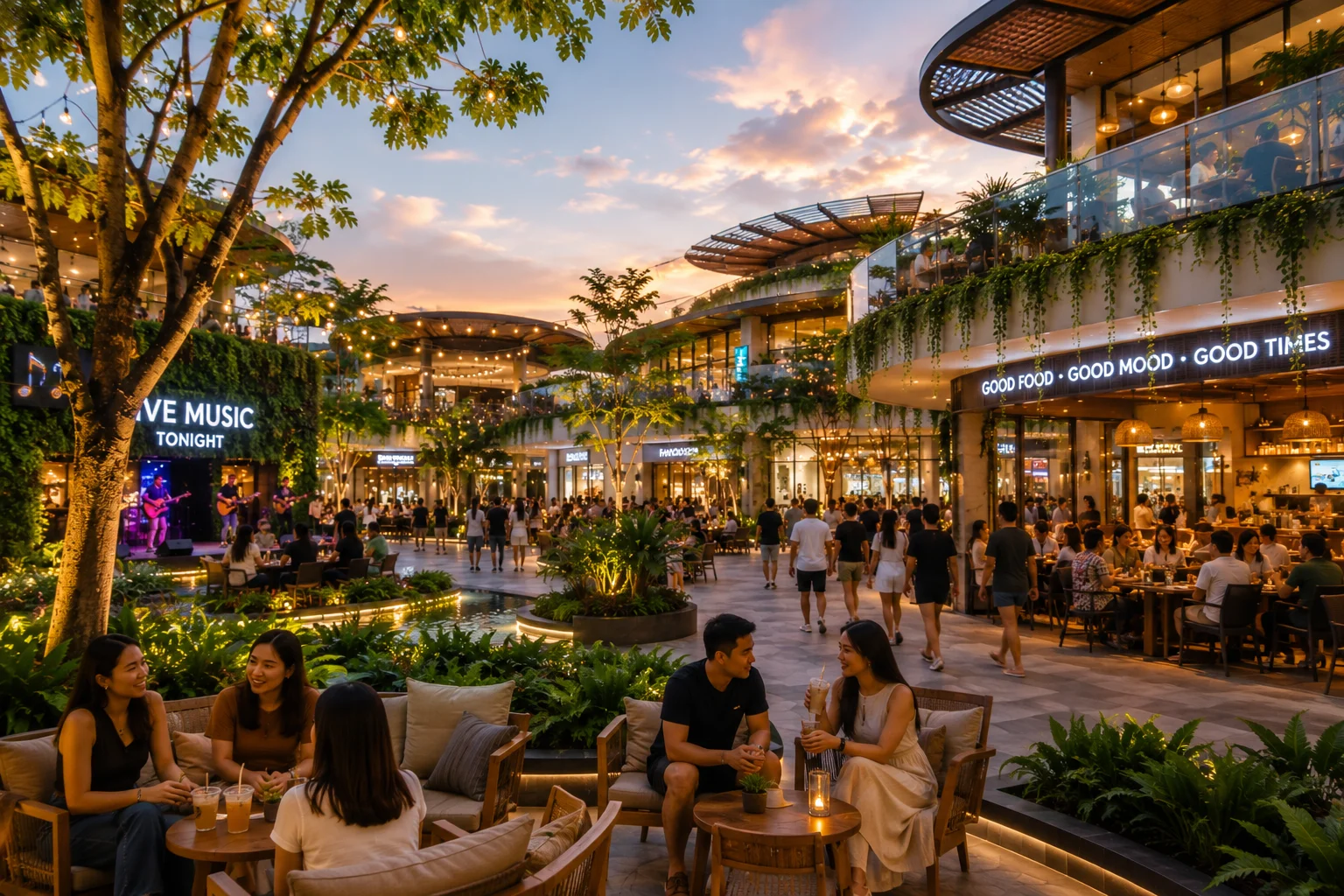
The role of malls in Indonesia has changed significantly over the years. While they remain important commercial destinations, many modern malls are increasingly designed around the way people spend their leisure time. Dining, entertainment, social gatherings, family activities, and comfortable public areas can now be just as important to the overall experience.
This shift is particularly interesting in Bali, where tourism, urban development, and changing lifestyles continue to influence how people use shared spaces. For residents and visitors alike, malls can provide an alternative environment for meeting friends, enjoying a meal, attending an event, or simply taking a break from outdoor activities.
Rather than viewing a mall only as a commercial destination, it is increasingly useful to consider it as part of the broader network of social spaces in Bali and Indonesia.
From Commercial Centers to Social Spaces
Traditionally, malls were largely designed around commercial activity. Visitors would arrive with a particular purpose, spend time inside, and leave after completing their planned activities.
Modern destinations are becoming more flexible. A person might visit a café without intending to spend time elsewhere, while a family may spend several hours combining dining, entertainment, and relaxation. Friends can meet after work, couples can enjoy dinner, and visitors can attend events without necessarily planning a long itinerary.
This change reflects a broader understanding of how people use urban environments. A successful destination does not necessarily need to provide only one reason to visit. Instead, it can provide an environment where several activities happen naturally.
The result is a more social atmosphere where people are encouraged to stay, interact, and return.
What Is a Social Space?
A social space is generally an environment where people can meet, communicate, relax, and participate in shared activities. It does not have to be a traditional public square or community center.
A café, park, plaza, restaurant, cultural venue, or entertainment destination can all serve social functions depending on how people use them.
Malls can become part of this category because they often provide a combination of accessibility, seating, dining, entertainment, shelter, and climate-controlled environments.
A recent study from Universitas Udayana examining shopping malls in Bali found that malls function as urban third places for Generation Y and Z. The research identified activities such as casual conversation, eating and drinking, exploring places, and people-watching among common activities, while also highlighting accessibility, thermal comfort, seating, shading, and greenery as factors influencing the perception of malls as third places. (E-Journal Universitas Warmadewa)
This provides an interesting perspective on why malls can become important social environments rather than simply commercial buildings.
Why Bali Is an Interesting Example
Bali has a unique relationship with social spaces. Traditional community environments, outdoor gathering areas, cafés, restaurants, beaches, and tourism destinations all play different roles in everyday life.
At the same time, the island has experienced continued urban development, particularly around areas with significant residential populations and tourism activity.
This creates demand for spaces that can accommodate different lifestyles. Residents may need convenient places to meet friends or spend time with family, while tourists may look for comfortable destinations between sightseeing activities.
A mall can provide a different type of environment from Bali’s traditional outdoor attractions. It can offer air-conditioned interiors during hot weather, covered spaces during rain, restaurants for longer meals, and entertainment options that do not depend entirely on outdoor conditions.
Meeting Friends in a Comfortable Environment
One of the simplest reasons people visit malls is to meet other people.
Friends may choose a café because it provides a comfortable environment for conversation. Groups can meet for lunch or dinner, while younger visitors may prefer entertainment venues or casual gathering areas.
The physical design of a destination can influence these interactions. Comfortable seating, shaded areas, open spaces, and accessible dining options can make it easier for visitors to stay longer.
Instead of feeling like a place people simply pass through, a well-designed mall can encourage visitors to stop, sit, talk, and observe what is happening around them.
This is especially relevant in busy urban environments where finding comfortable places to spend unstructured leisure time can sometimes be difficult.
Dining as a Social Activity
Food is one of the strongest reasons people gather together, and dining has naturally become an important component of modern mall environments.
Restaurants and cafés can function as meeting points for different groups. A family may gather for dinner, friends may meet for coffee, and colleagues may use a restaurant for an informal gathering after work.
The variety of dining formats also allows visitors to choose the atmosphere they prefer. Some may want a quiet café, while others prefer a lively restaurant with outdoor seating and evening entertainment.
This means dining is not simply an additional facility. It can shape the social identity of an entire destination.
Entertainment Creates Shared Experiences
Entertainment is another important part of the social function of modern malls.
Movies, live performances, cultural events, exhibitions, children’s activities, and seasonal programs create experiences that people can enjoy together.
Shared experiences can be particularly valuable because they give groups something to participate in rather than simply providing a place to sit.
For example, friends might meet for dinner before watching a movie. Families could attend an event before having dessert. A couple might enjoy a live performance after spending the afternoon at a café.
These combinations allow a mall to become part of a broader leisure itinerary.
Open Spaces Change How People Interact
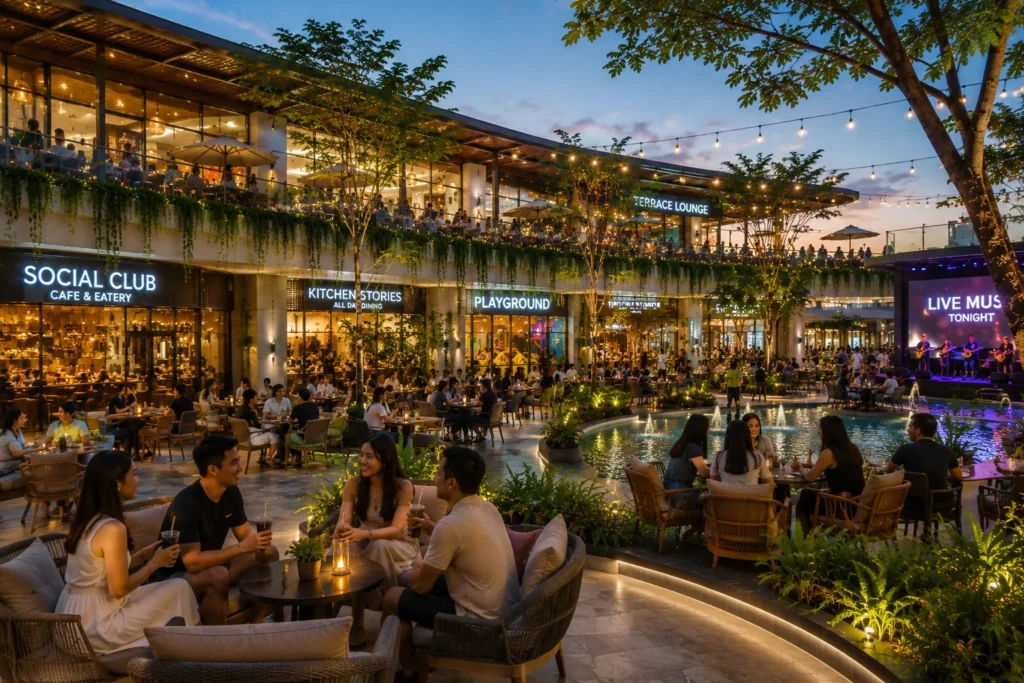
The design of a mall can have a major influence on whether people feel comfortable spending time there.
Open courtyards, landscaped areas, terraces, pedestrian walkways, and outdoor seating can create a more relaxed environment. These spaces can also encourage spontaneous interactions because people can see and access different activities around them.
In Bali, outdoor and semi-outdoor spaces can be particularly attractive because they allow destinations to incorporate tropical landscaping and natural elements into the visitor experience.
Greenery, water features, shaded seating, and pedestrian-friendly areas can make a destination feel less enclosed and more connected to its surroundings.
The Importance of Comfort
Comfort is another reason malls can become effective social environments.
Bali’s climate can be hot and humid, while sudden rainfall can interrupt outdoor plans. An indoor environment provides visitors with an alternative when weather conditions become uncomfortable.
Air conditioning, seating, clean facilities, accessible restaurants, and sheltered walkways can all contribute to a more predictable experience.
This does not mean visitors want to spend all their time indoors. Instead, destinations that combine indoor comfort with outdoor spaces can give people more control over how they spend their time.
Malls for Different Generations
The social role of malls can also vary between generations.
Young adults may use malls as places to meet friends, enjoy cafés, attend entertainment events, or simply observe the surrounding atmosphere. Families may prioritize dining and activities that children can enjoy.
Older visitors may value comfortable seating, accessibility, restaurants, and quieter areas where they can relax.
A destination that accommodates these different needs can remain active throughout the day.
This variety is one of the strengths of a mall compared with a single-purpose venue. Different people can use the same environment in completely different ways.
A Different Kind of Experience for Tourists
For tourists, malls can complement rather than replace Bali’s outdoor and cultural attractions.
A visitor might spend the morning exploring a temple or beach, then look for an indoor environment during the hottest part of the afternoon. Later, they could have dinner and enjoy entertainment before returning to their accommodation.
For travelers interested in discovering a new destination within the island’s evolving urban landscape, a mall in bali indonesia can therefore become part of a broader leisure itinerary rather than simply another commercial stop.
This is particularly relevant for visitors traveling with families or groups because different people may want different activities during the same afternoon or evening.
Malls as Modern Third Places
The idea of the “third place” provides a useful way to understand this evolution.
Traditionally, home is considered one important environment and work or school another. A third place is somewhere people can spend time outside those primary environments, often in a relatively informal and social setting.
Malls can sometimes fulfill this role because they provide accessibility, food, entertainment, seating, and opportunities for interaction within one destination.
The Bali-focused academic research mentioned earlier specifically describes malls as hybrid social infrastructures that can redefine the traditional third-place concept through a combination of commercial design and generational behavior. (E-Journal Universitas Warmadewa)
This does not mean every mall automatically becomes a successful social space. The design and programming still matter considerably.
What Makes a Mall Feel Social?
Several elements can help create a stronger social environment:
- Comfortable seating areas
- Cafés and restaurants
- Open-air or semi-outdoor spaces
- Greenery and landscaping
- Entertainment facilities
- Event and performance areas
- Family-friendly activities
- Good pedestrian circulation
- Comfortable indoor environments
- Places where visitors can stay without feeling rushed
The combination is more important than any individual feature.
A mall with excellent restaurants but nowhere comfortable to sit may not encourage people to stay. Similarly, an attractive building may not become a social destination without activities that bring people together.
The Future of Social Spaces in Bali
As Bali continues to develop, the relationship between commercial destinations and social environments is likely to become increasingly important.
People need places where they can spend leisure time comfortably, particularly as urban areas become more active and tourism continues to influence development.
Future destinations may place greater emphasis on landscaping, public areas, cultural programming, entertainment, dining, and community-oriented activities.
This evolution can also encourage more thoughtful approaches to architecture. A mall does not necessarily need to feel completely enclosed or disconnected from its surroundings. It can incorporate local environmental characteristics, tropical landscaping, open spaces, and gathering areas to create a stronger sense of place.
Final Thoughts
The changing role of malls demonstrates that modern destinations are increasingly about how people spend time rather than simply what they do inside them.
In Bali and across Indonesia, malls can serve as places for dining, entertainment, family activities, social gatherings, and relaxation. Their value comes from bringing different experiences together in an environment that is accessible and comfortable.
The concept of social spaces in Bali is therefore not limited to traditional public areas. Modern malls can also contribute to urban social life when their design, facilities, and programming encourage people to meet, interact, and stay.
As expectations continue to evolve, the most interesting mall destinations will likely be those that understand this broader role and create environments where visitors have genuine reasons to spend time together.