
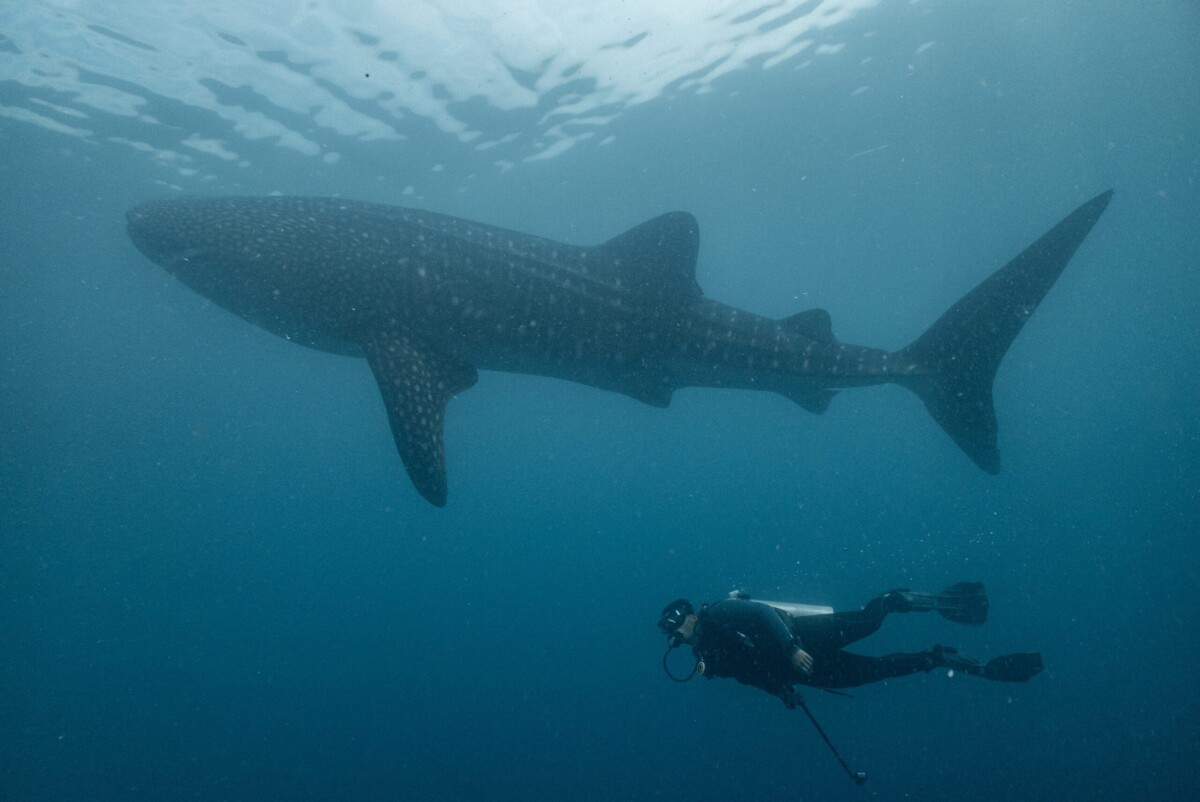
Few marine experiences match the scale of being in the water alongside a whale shark. These animals can reach over 12 meters in length, yet they move slowly enough that a snorkeler can keep pace. Knowing where to swim with whale sharks starts with understanding where they gather seasonally and which destinations offer encounters that respect the animal. Indonesia remains one of the strongest options globally, with remote sites like Cenderawasih Bay and the waters around the Togean Islands in Sulawesi offering some of the least crowded encounters anywhere.
Why Do People Travel Thousands of Miles to Swim With Whale Sharks
Whale sharks are filter feeders, not predators. Despite their size, they pose no threat to humans and move through the water with a calm, almost meditative rhythm. That combination of enormous scale and total gentleness is what makes a whale shark encounter feel unlike anything else in the ocean. There is no chasing involved. You slip into the water, hold still, and let the animal decide how close it wants to come. For many travelers, it ranks as a once in a lifetime moment.
They are also endangered. The IUCN Red List classifies whale sharks as endangered, with populations declining due to fishing pressure and vessel strikes. Swimming with them in a responsible setting is not just a travel experience, it is a way to support the economics of protecting them.
The Best Places to Swim With Whale Sharks Around the World
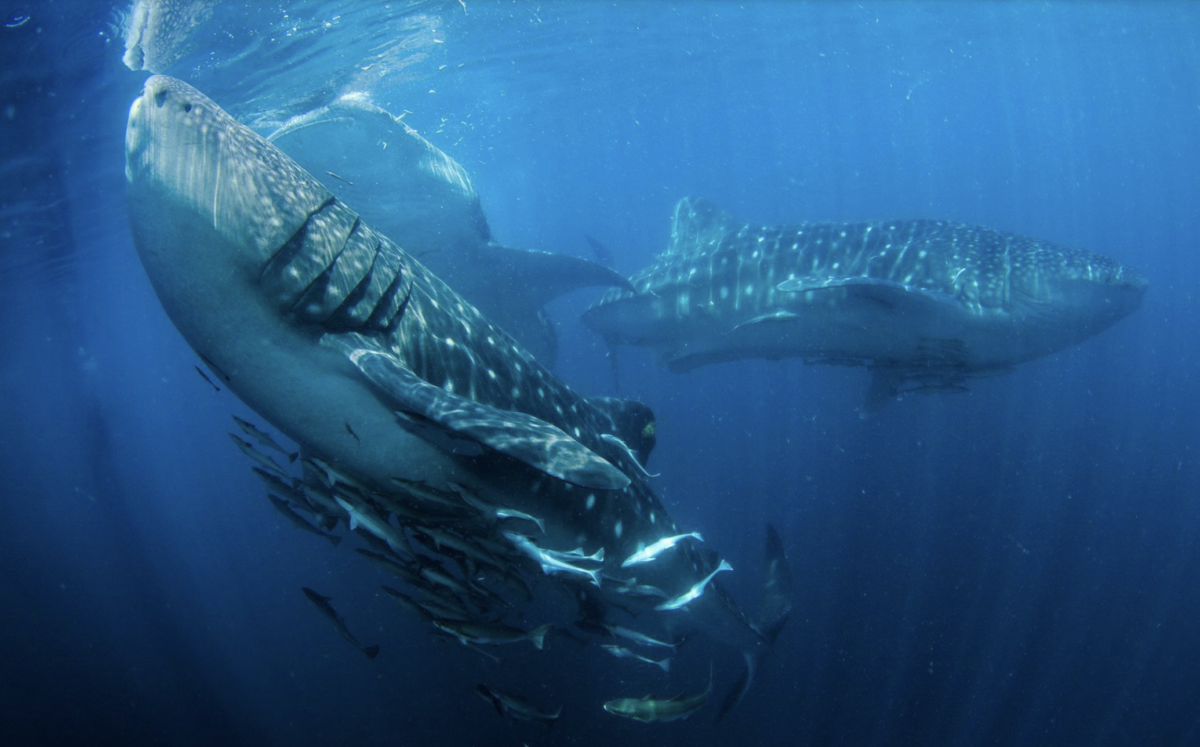
Source: Diving with Whale Shark and Jakare liveaboard
Not all destinations are equal. Some offer wild, unregulated encounters. Others have built careful systems around conservation. These are the best places to swim with whale sharks based on reliability, ethics, and overall experience.
Cenderawasih Bay, Indonesia
Cenderawasih Bay in West Papua is widely considered the most reliable whale shark destination on earth. The animals gather around traditional fishing platforms called bagans, where they feed on small baitfish. Encounters here happen in calm water, often within meters of the surface, and the sharks return daily. Access requires a liveaboard or charter, which keeps visitor numbers low.
Gorontalo and the Togean Islands, Indonesia
The Gulf of Tomini around Gorontalo and the Togean archipelago is one of the lesser known spots to swim with whale sharks Indonesia has to offer. Whale shark sightings in these waters are seasonal but increasingly documented, and the surrounding reef systems rank among the finest sulawesi diving has available. Operators like Jakare Liveaboard run multi-day routes through this region, combining diving and snorkeling across some of the most biodiverse waters in the Coral Triangle.
Ningaloo Reef, Australia
Ningaloo is one of the best managed whale shark programs in the world. The Western Australian government caps the number of swimmers per encounter and monitors the animals by air. Season runs from March through July, timed with the coral spawning that attracts the sharks. It is more expensive than Southeast Asian destinations but offers a tightly regulated experience.
Isla Holbox, Mexico
Holbox and the nearby Isla Mujeres are the go to destinations in the Caribbean for whale shark encounters. Hundreds of sharks gather from June through September to feed on plankton blooms. The boats are regulated and guides enforce distance rules, though peak season can feel crowded. Best visited early in the morning when boats are fewer.
South Ari Atoll, Maldives
The Maldives offers year round whale shark sightings in the South Ari Atoll, one of the few places where encounters are possible outside a narrow season. The sharks here tend to be juveniles, smaller and more curious. Snorkeling from a dhoni boat is the standard approach. Conservation programs run by local resorts tag and track individual animals.
Oslob, Philippines
Oslob is popular and easy to access, but it comes with ethical concerns that are worth understanding before you go.
Is Oslob an ethical place to swim with whale sharks? The whale sharks in Oslob are fed by fishermen to keep them near the shore, which alters their natural feeding behavior and migration patterns. Marine biologists have raised concerns that this practice creates dependency and increases boat strike risk. While the experience is accessible and affordable, it does not represent a wild encounter. Travelers who prioritize responsible whale shark tourism may want to consider alternatives where the animals arrive on their own terms.
When Is the Best Season for Whale Shark Encounters
Whale shark season varies by destination. Planning around these windows makes the difference between a guaranteed sighting and an empty ocean.
Cenderawasih Bay offers encounters year round due to the permanent bagan platforms. Ningaloo runs from March through July. Holbox and Isla Mujeres are best from June through September. The Maldives sees whale sharks year round, with peaks from January to April in South Ari Atoll. Gorontalo and the Togean Islands area sees seasonal sightings roughly from May through October, aligning with calmer seas.
Can you swim with whale sharks year round? In theory, yes, if you are flexible on destination. Cenderawasih Bay and the Maldives both offer year round sightings. Most other locations have defined seasons tied to plankton blooms or water temperature shifts.
How to Swim With Whale Sharks Responsibly
Responsible encounters follow a set of principles that protect the animal and preserve the experience for future visitors.
Maintain a distance of at least three meters from the body and four meters from the tail. Do not touch the animal under any circumstances. Avoid using flash photography. Enter the water quietly, without jumping or splashing. Do not block the shark’s path or attempt to ride it. Swim alongside, not directly in front.
These guidelines exist because whale sharks are sensitive to disruption despite their size. Repeated stress from poorly managed tourism can cause them to leave an area permanently, which harms both the population and the local economy that depends on them.
Choose operators that follow established codes of conduct, limit group sizes, and contribute to local marine research. The best encounters feel calm and unhurried because the operator has prioritized the animal’s comfort as much as yours.
What a Whale Shark Swim Actually Feels Like
The first thing that strikes you is the silence. There is no engine noise, no guide shouting instructions. You are floating at the surface, mask down, watching a shape materialize from the blue. It gets larger faster than you expect. Then the spots become visible, each pattern unique to the individual, and the mouth opens wide in a slow, purposeful arc as it filters the water column ahead of it.
Most encounters last between two and ten minutes. Some sharks pass through once. Others circle back. On a liveaboard Indonesia route through the eastern archipelago, these encounters can happen more than once in a single trip, folded into days of diving, reef exploration, and island hopping that make the whale shark moment feel like part of something larger rather than a standalone event.
The water is warm. The animal is calm. You realize very quickly that the whale shark is not performing for you. It is simply moving through its world, and for a few minutes, you are allowed to be part of it.
Whale sharks do not stay in one place forever, and neither do the windows to see them. The destinations on this list offer genuine, ethical access to one of the ocean’s most extraordinary animals. If Indonesia’s remote eastern waters are calling, and you want to combine whale shark encounters with some of the best diving in Indonesia, Jakare Liveaboard is one way to reach the places most travelers never get to see.
Frequently Asked Questions
How close can you get to a whale shark? The standard guideline is three meters from the body and four meters from the tail. Some destinations enforce stricter distances. Let the animal set the proximity, never chase or corner it.
Do you need diving experience to swim with whale sharks? No. Most whale shark encounters happen at the surface while snorkeling. Basic swimming confidence and comfort in open water are enough. Scuba diving with whale sharks is sometimes offered for deeper passes but is not required for most encounters.
Are whale sharks dangerous? No. Whale sharks are filter feeders that eat plankton and small fish. They have no interest in humans and no ability to bite. The main physical risk is an accidental tail strike, which is avoided by maintaining proper distance.
What should you bring for a whale shark swim? A well fitting mask and snorkel, reef safe sunscreen, a rash guard for sun protection, and an underwater camera. Fins help you keep pace. Avoid dangling straps or loose gear that could contact the animal.